The Bread Divide: Ordering a Kebab Like a Local Anywhere in Britain
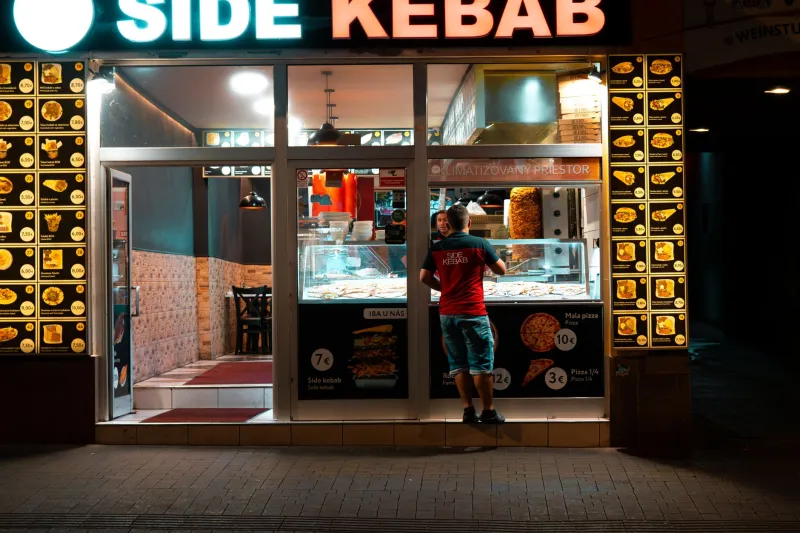
There is a moment, somewhere between the door and the counter, when a kebab order can go one of two ways. You either say the right words and get a proper feed, or you say the wrong ones and end up with a pitta that wasn’t what you meant, a sauce you didn’t ask for and a side you didn’t know existed. Britain is small on a map and enormous on a menu board. Walk into a kebab shop in Manchester, Newcastle, Glasgow or Coventry and you’ll find the same hot grill, the same late-night hum, the same paper-wrapped promise — but the vocabulary shifts. This is a field guide to that shift.
First, the bread question
Pitta is the default in most kebab shops, and rightly so. It’s the envelope that holds the whole thing together: warm, slightly chewy, quick to soak up chilli sauce and garlic mayo without collapsing into a sad heap. A wrap — often called a durum — is the bigger, thinner option, rolled tight and built for people who want salad, meat and sauce in every bite. Naan turns up in plenty of shops too, especially where the menu leans towards curry-house territory. It’s pillowy, a bit heavier, and a very good shout if you want something that feels like a full meal rather than a snack.
Then there’s the regional bread roll. In Greater Manchester and Merseyside, you’ll hear ‘barm’ or ‘barm cake’. In the Midlands, ‘bap’ and ‘cob’ do the rounds, and around Coventry you might meet a ‘batch’. Head north-east and the stottie appears — thick, floury and built for filling. Most kebab shops won’t put doner meat in a stottie by default, but ask nicely and you’ll often find a counter happy to improvise. The bread is the first clue to where you are. The second is what you call the meat.
The meat and the name
Doner, shish, mixed, special, house special. These words look simple until you’re standing in front of a menu with six different ‘specials’ and no explanation. Doner is the rotating elephant leg — shaved, juicy, best when it’s had a few minutes on the grill to crisp at the edges. Shish is the charred skewer, chicken or lamb, and it’s the one to order when you want something that tastes of the grill rather than the sauce. A mixed kebab should give you both, though the exact ratio is a local secret.
‘Special’ is the word that changes most. In one shop it means extra meat. In another it means meat, chips and salad in a box. In another it’s a house sauce that nobody will fully explain. The practical move in 2026 is to ask. ‘What’s in your special?’ is not a daft question. It’s the difference between a tenner well spent and a box of surprises. And if you’re ordering for a group, ask whether the special is per person or big enough to share. Some are generous. Some are competitive eating.
Sauce diplomacy
Every kebab shop has its own sauce politics. Chilli sauce is the headline act — sometimes a thin, vinegary hot sauce, sometimes a thick, smoky paste, sometimes a homemade job with a kick that arrives a second late. Garlic mayo is the cooling sidekick. Burger sauce is the wildcard: tangy, pink, and weirdly perfect with chips. Then there’s mint yoghurt, which divides people, and ‘red sauce’, which means ketchup in most of Britain and is best treated as a chip condiment rather than a kebab decision.
If you’re taking your food home, ask for the sauce on the side. It’s the single easiest upgrade to a late-night order. A kebab that travels twenty minutes with sauce already inside is a kebab that arrives steamed, soggy and slightly regretful. Sauce in a little tub means you can add it at the kitchen table, in the right amount, with the chips still crisp. And if you’re in a shop that offers pickled chillies, say yes. They cut through the fat and make the whole thing taste brighter.
Sides that give the game away
Chips are universal, but the names around them aren’t. Cheesy chips are a national language now, but you’ll still see ‘chips and cheese’ on some boards, and in Scotland the munchy box is its own glorious category: kebab meat, chips, salad, sauces and sometimes naan or pizza all in one tray, built for sharing and then not sharing. In Teesside, the parmo has its own takeaway folklore, even if it isn’t strictly a kebab. In London, you’re more likely to see grilled veg and hummus alongside the usual suspects. In a small-town shop, the side might be a buttered roll and a can of pop, and honestly that’s a valid meal.
These aren’t gimmicks. They’re local habits. A kebab shop feeds the street it sits on, and the menu bends towards the people who come through the door at 11pm on a Friday. If a shop sells battered sausages, curry sauce and a house special, it’s telling you something about its regulars. Read the board like a local newspaper.
How to decode a new counter
Start with the queue. If people are ordering the same thing, that’s usually the thing to order. Ask what bread comes as standard. Ask whether salad is included or extra. Ask for sauce on the side if you’re travelling. And don’t be afraid to order chips fresh — a good shop will drop a new batch rather than scoop from the bottom of the warmer. At 4in1 Express Kebab, we’d rather you asked than guessed. A kebab is a simple pleasure, but it’s not a mind-reading exercise.
The bread divide isn’t a problem to solve. It’s the point. Britain’s kebab shops are local in the best way: same grill, different words, proper flavour. Learn a few of those words and you can walk into any counter in the country and order like you’ve been going there for years. In 2026, that’s still the best way to eat.